






Proposed Reduction in CSR Threshold Limits: Impact, Pros, Cons and National Interest :
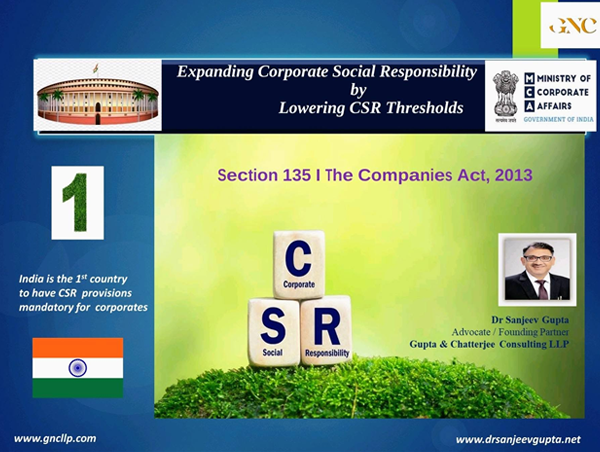
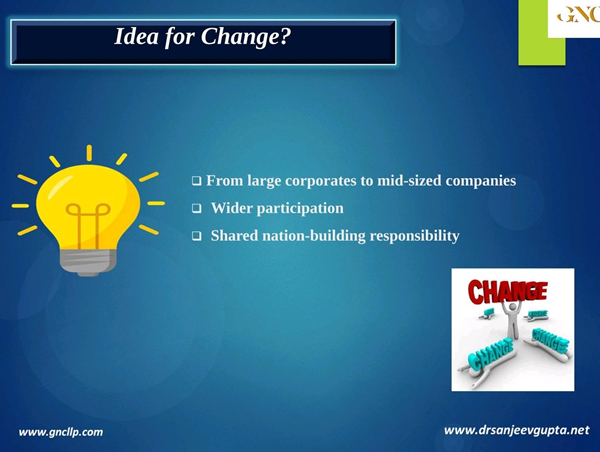
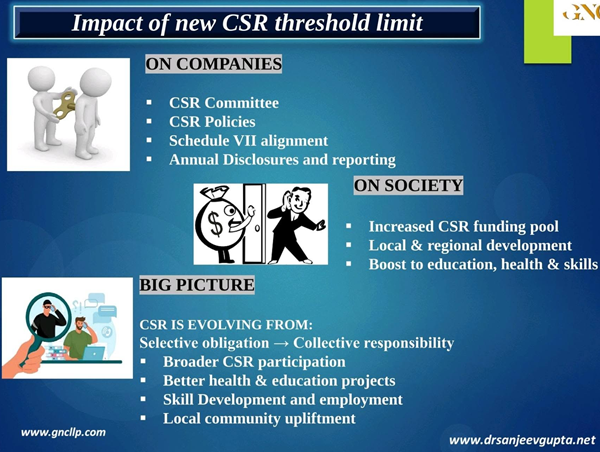
The proposed reduction in threshold limits for applicability of Corporate Social Responsibility (CSR) under Section 135 of the Companies Act aims to widen corporate participation in nation-building initiatives. By lowering the qualifying criteria relating to net profit, turnover and net worth, a larger number of mid-sized companies would be brought within the CSR framework, thereby increasing aggregate social investment in critical areas such as education, healthcare, skill development, environmental sustainability and rural development.
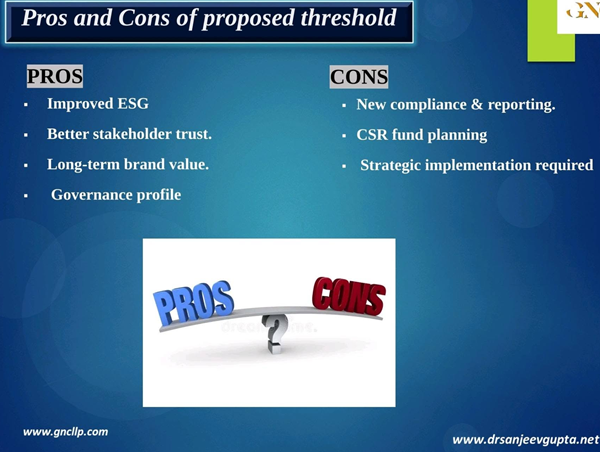
From a national interest perspective, the proposal aligns corporate growth with inclusive development and helps bridge gaps in public welfare spending. Enhanced CSR participation can accelerate achievement of Sustainable Development Goals (SDGs) and reduce regional and socio-economic disparities.
However, the proposal also has certain challenges. Smaller and mid-sized companies may face financial and compliance pressures, especially during early growth stages. Mandatory CSR expenditure may restrict reinvestment capacity, impact working capital and increase administrative burden. There is also a risk of CSR becoming a box-ticking exercise rather than outcome-oriented social engagement.
On balance, if implemented with phased thresholds, flexibility in spending and simplified compliance mechanisms, the reduction in CSR limits can foster responsible capitalism while sustaining economic growth. A calibrated approach would ensure that CSR remains a tool for meaningful social impact without hampering entrepreneurship and industrial expansion.
In proposed limit slide, limit is amount mentioned in that slide or more than the amount mentioned therein.

